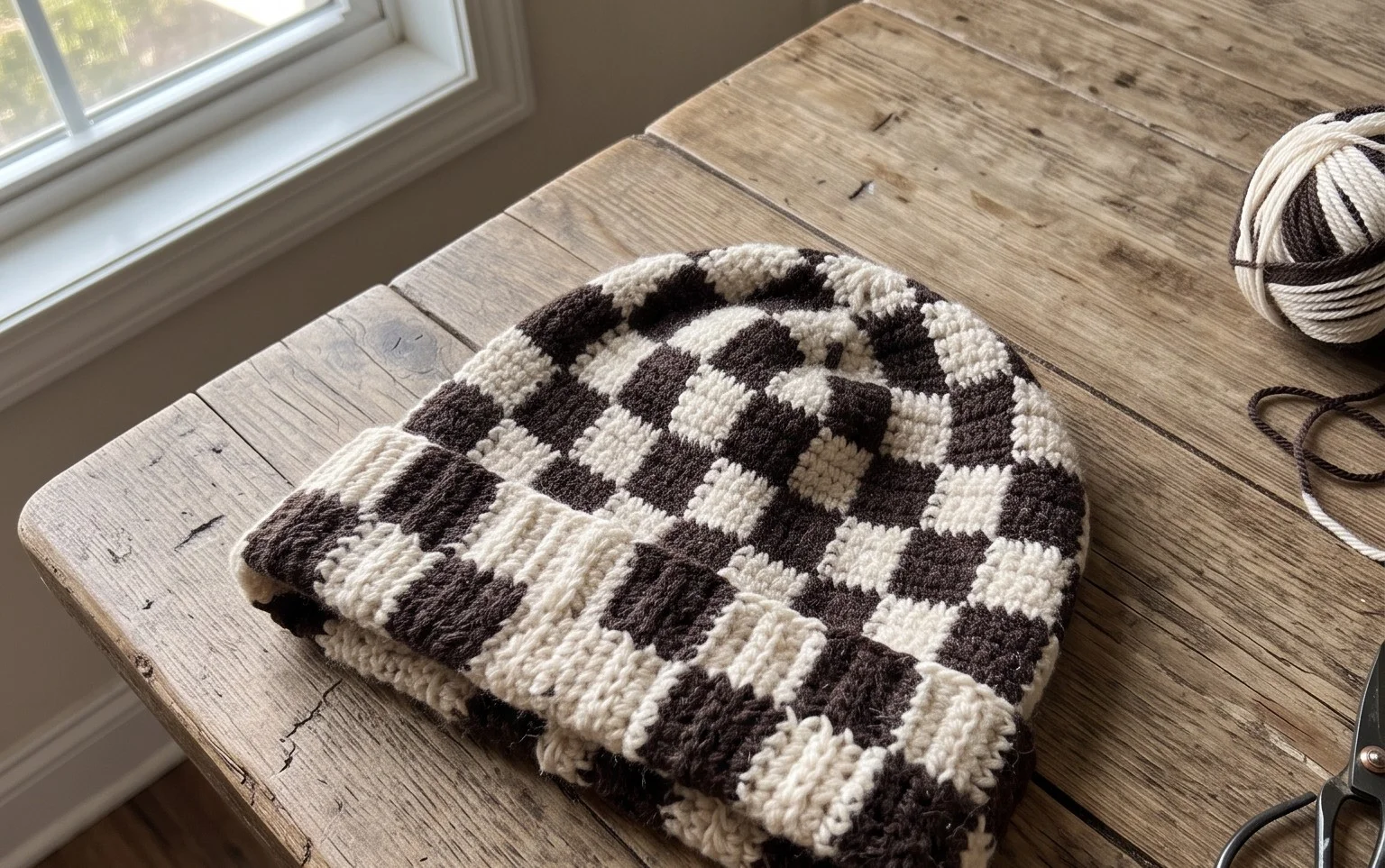
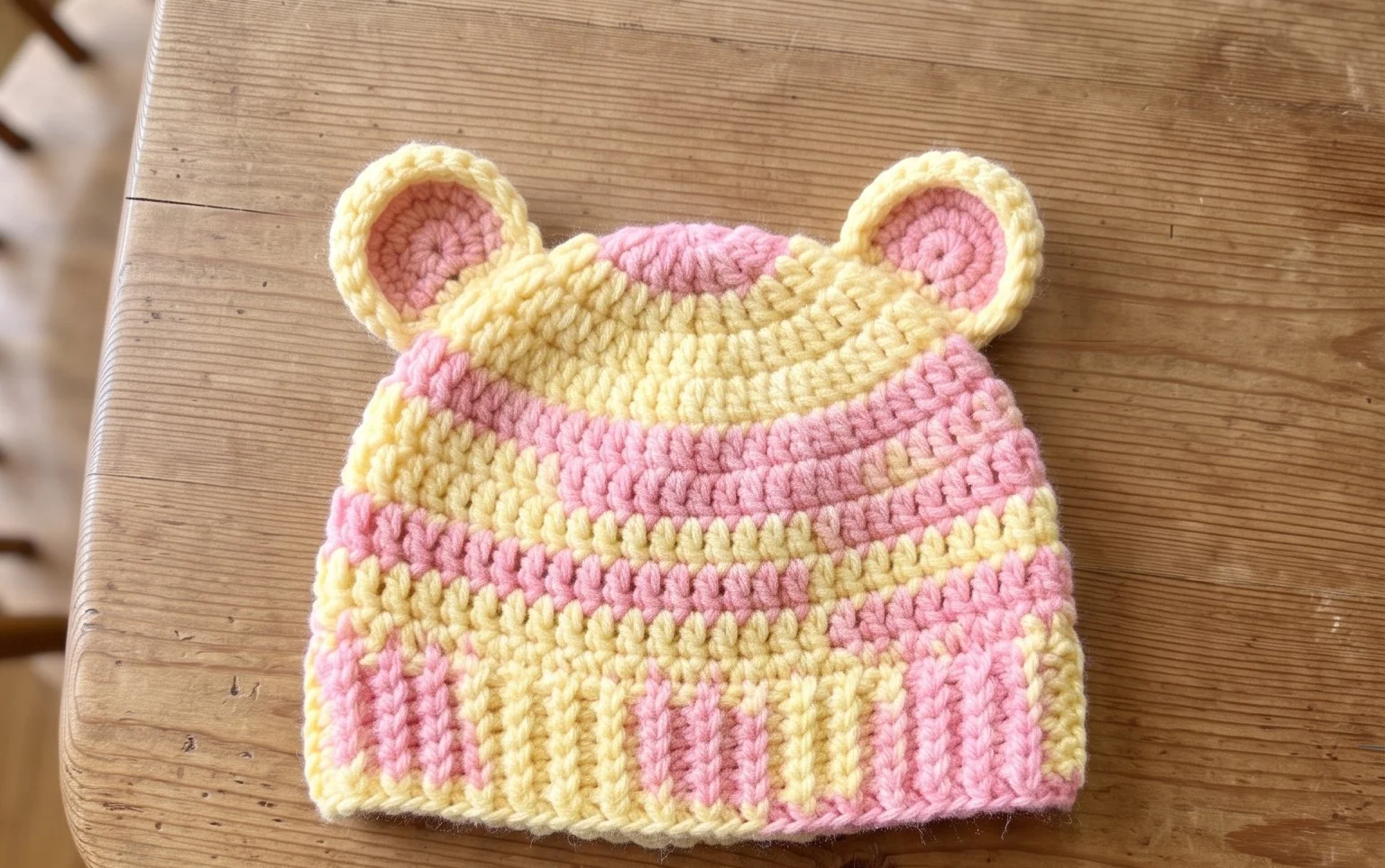
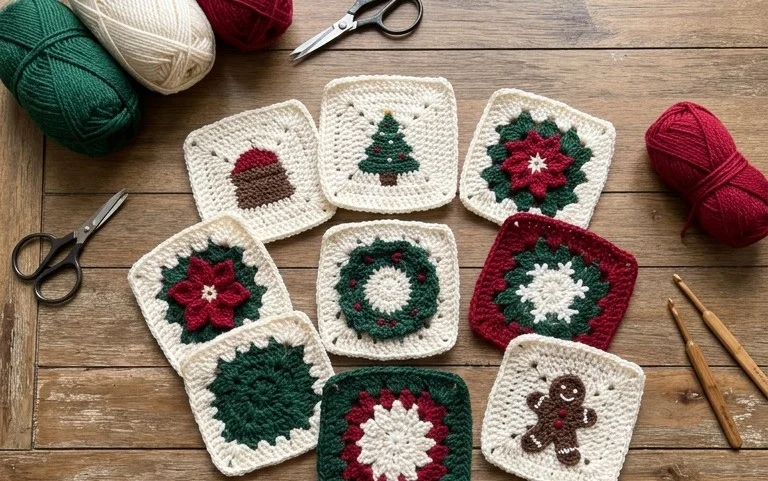
25 Easy Christmas Granny Square Crochet Patterns to Try
Soft yarn in cranberry red, pine green, and warm cream gives Christmas granny squares their familiar holiday look, while the open spaces between clusters keep each piece light and flexible. These 25 patterns offer plenty of ways to use the squares, from blankets and cushions to small ornaments and gift accents. Beginners can practice working clusters into chain spaces and changing colors, while experienced crocheters can enjoy mixing motifs into a larger project. Each square is a manageable piece to finish between other seasonal tasks, and a stack of them makes a thoughtful handmade gift. You’ll find ideas for arranging colors, joining squares neatly, and choosing a project size that suits your time and yarn. A simple border can help bring the finished pieces together.
The firm texture of a cotton dishcloth comes from close single crochet stitches and a hook slightly smaller than the yarn label may suggest. This beginner-friendly cloth is worked flat in rows, so it is easy to keep track of the stitches and adjust your tension as you go.
Why You’ll Love This Pattern
This cloth uses one basic stitch throughout, making it a good first project for practicing even tension. Its simple rectangle is useful at the sink, and cotton yarn handles repeated washing better than many soft acrylic yarns. The pattern also works well with leftover cotton, provided you have enough yarn for a consistent fabric. A finished cloth makes a practical handmade gift and can be completed in an afternoon.
The rows were easy to follow, and I liked having a useful project to practice my single crochet. My first cloth came out a little wider than planned, but it still works well.
— Maya, beginning crocheter
Pattern Overview & Skill Level
- Skill Level: Beginner.
- Approximate Time: 2–3 hours, depending on pace and experience.
- Construction: Worked flat in rows from the foundation chain, with no seaming or joining.
- Finished Dimensions & Sizing: About 7.5 × 8.5 in (19 × 22 cm), before washing and drying. Small differences in tension can change the final size.
The stitch count is 30 single crochet stitches in each row. For the listed dimensions, aim for a gauge of 4 single crochet stitches and 4 rows per inch (2.5 cm), measured after gently flattening the swatch without stretching it. If your swatch has more stitches per inch, try a larger hook; if it has fewer, try a smaller hook.
Materials & Supplies Needed
- Yarn: About 90 yd (82 m) of worsted-weight (#4) cotton yarn. Use one color or combine colors, changing yarn at a row edge. Cotton gives the cloth a firm, absorbent feel.
- Hook Size: 4.5 mm / 7. If your fabric feels stiff or your gauge is too tight, try a 5.0 mm / H-8 hook and check the dimensions again.
- Notions: Tapestry needle for weaving in ends, scissors, and a ruler or tape measure. A stitch marker is optional for marking the first stitch of a row.
- Substitutions: A similar-weight cotton-linen blend can work, though it may feel less soft and may drape differently. Avoid fuzzy yarns and most wool for a cloth that needs frequent washing. A different yarn weight changes the finished size and texture, so make a gauge swatch before starting.
Stitch Guide & Abbreviations (US Terms)
- ch: Chain.
- sc: Single crochet. Insert the hook into the stitch, yarn over and pull up a loop, yarn over again and draw through both loops.
- st(s): Stitch or stitches.
- turn: Rotate the work to begin the next row.
- sc in each st: Work one single crochet into every stitch across the row. The turning chain does not count as a stitch in this pattern.
Step-by-Step Pattern Instructions
Dishcloth
Use a relaxed but even tension. The turning chain at the start of each row is for height only and does not count as a stitch. Count the 30 single crochet stitches after every row, especially near the edges, where it is easy to skip the first stitch or work twice into the last stitch.
- Row 1: Ch 31. Sc in the second ch from the hook and in each ch across. Turn. (30 sts)
- Row 2: Ch 1. Sc in each st across. Turn. (30 sts)
- Rows 3–34: Repeat Row 2, keeping 30 sc in every row. Turn after each row. (30 sts each row)
After Row 34, fasten off, leaving a tail long enough to weave in. Check that the cloth lies flat. If the edges pull inward, the tension may be too tight; if they flare, you may have added stitches at the row ends. Correcting an uneven edge before weaving in the yarn tail is easier than trying to reshape it later.
Finishing
Thread the tail onto a tapestry needle and weave it through several stitches on the wrong side, then change direction and weave through a few more. This helps the end stay secure during washing. Weave in the starting tail the same way. Trim the remaining yarn close to the fabric without cutting into a stitch. Gently stretch the cloth to the intended rectangle and measure it before its first wash.
Care & Washing Instructions
- Wash cotton in cool or warm water, up to about 40°C (104°F), unless the yarn label gives different directions.
- Lay the cloth flat to dry, smoothing the edges while it is damp.
- Reshape it gently after washing; light blocking is optional, and the yarn label takes priority if the fiber is a blend.
Pro Tips & Common Mistakes to Avoid
- Keep your loops a consistent height. Pulling the working yarn tightly after each stitch can make the cloth stiff and narrower than the gauge suggests.
- Count all 30 stitches at the end of each row. Mark the first stitch if you tend to miss it when working into the turning chain area; do not work into the turning chain itself.
- Weave in yarn tails on the wrong side and change direction once or twice. A short tail simply tucked through one row may work loose with repeated laundering.
- For a wider cloth, add an even number of chains to the foundation and work one fewer sc than the chain count. Each extra stitch adds roughly ¼ in (6 mm) at the stated gauge and uses more yarn; adding 4 chains makes the cloth about 1 in (2.5 cm) wider.
Frequently Asked Questions
Can I use acrylic yarn instead of cotton?
You can, but acrylic may absorb less water and can feel warmer or less suited to scrubbing. Check the care label and expect the texture and drape to differ from the cotton version.
How can I make the cloth longer?
Work additional repeats of Row 2. At the stated gauge, about 4 extra rows add 1 in (2.5 cm) to the length. You will need more yarn, and the cloth may take longer to dry if you make it substantially larger.
Is this pattern suitable for a first crochet project?
Yes. It uses chains and single crochet in straight rows, with no shaping or sewing. The main challenge is keeping the row ends even, so count 30 stitches after each row.
May I sell dishcloths made from this pattern?
Check the designer’s terms before selling finished items, and follow any stated credit requirements. This guide does not establish permission for commercial use of another designer’s pattern.
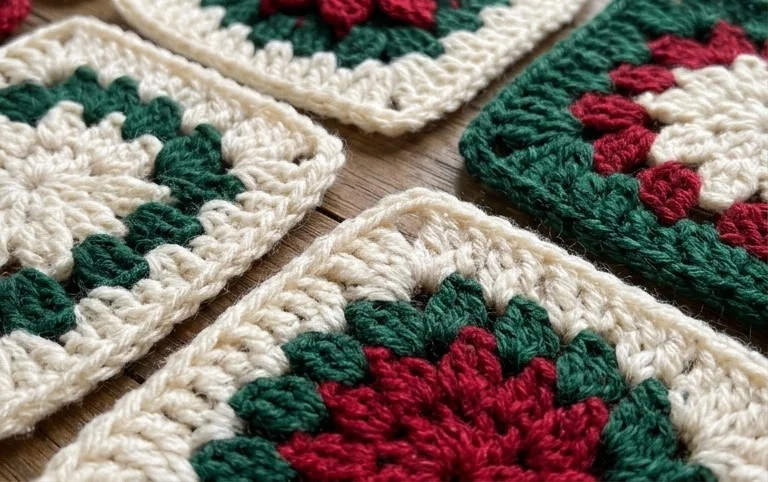
Once the last ends are woven in, your Christmas squares are ready to become a keepsake blanket, a cushion cover, or a small decoration for the tree. The repeating clusters make each motif satisfying to work, and a tidy border gives the finished project a clean edge. For a simple variation, swap traditional red and green for cream and gold, or use one accent color against a neutral background. If you make one of these projects, share a photo on Pinterest or your favorite social media platform so other crocheters can see your color choices. Then browse the blog for more free crochet patterns, including useful projects for gifting and seasonal decorating.