Easy Crochet Gingerbread Heart Ornaments Free Pattern
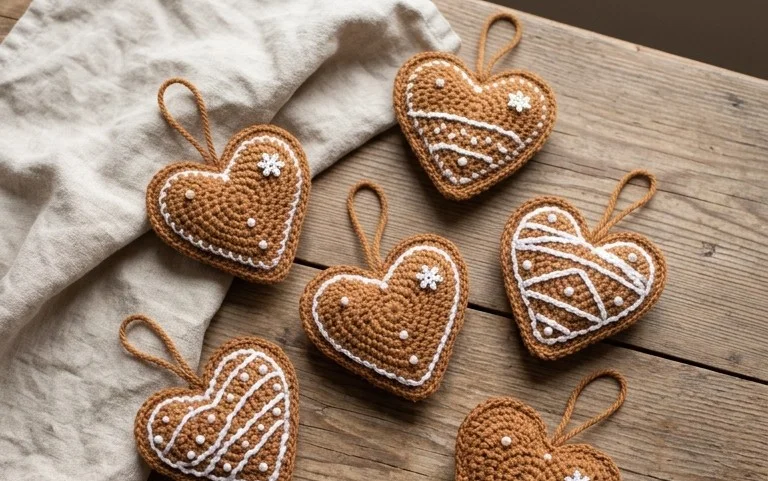
Warm brown yarn, a little icing-style detail, and a hanging loop give these crocheted gingerbread hearts the look of tiny treats ready for the tree. They feel soft and lightweight in your hand, and their small size makes them a satisfying project for a quiet evening or a handmade holiday gift. Beginners can practice basic crochet stitches while shaping the heart, and home decor lovers can add a few to a garland, wreath, or gift package. In this pattern, you’ll learn how the pieces are worked and joined, with simple finishing details that create the gingerbread look. You can follow the suggested colors or choose your own, then add a loop for hanging wherever a little handmade decoration would fit.
Why You’ll Love This Pattern
A firm cotton dishcloth is useful at the sink, and its simple rows make this a comfortable project to work on while watching a show or chatting. This beginner-friendly pattern uses single crochet throughout, so you can focus on keeping the edges straight rather than learning several stitches at once.
The cloth is also practical for using leftover worsted-weight cotton. Choose one color for a classic square, or use a different color for the final rows if you have a small amount of yarn to use up. Cotton absorbs water and tolerates regular washing, making the finished cloth handy for everyday kitchen cleanup.
The single crochet rows were easy to follow, and I had a sturdy little cloth finished in an evening.
— Maya, home crocheter
Pattern Overview & Skill Level
- Skill Level: Beginner. You need to know how to chain and single crochet.
- Approximate Time: About 2–3 hours, depending on your pace and how often you stop to check your edges.
- Construction: Worked flat in turned rows, then finished by weaving in the yarn ends. The pattern has no separate border.
- Finished Dimensions & Sizing: Approximately 8.5 inches wide by 7.5 inches tall, based on the gauge below. Small differences in tension will change the finished measurements.
Materials & Supplies Needed
- Yarn: About 60 yards of worsted-weight (#4) 100% cotton yarn. One solid color is enough; a second color is optional if you want to work the final rows in a contrast shade.
- Hook Size: 5.0 mm / H-8 crochet hook. If your stitches are very loose, try 4.5 mm / 7.
- Notions: Tapestry needle for weaving in ends, scissors, and a ruler or tape measure. A stitch marker is optional for marking the first stitch of a row.
- Gauge: 14 single crochet stitches and 16 rows measure about 4 inches square. Make a swatch if matching the listed size matters; adjust your hook rather than changing the stitch count.
- Substitutions: Use another 100% cotton yarn of similar thickness. A thinner yarn will make a smaller, lighter cloth; a thicker yarn will make a larger, denser cloth and may need a larger hook. Avoid fuzzy yarn, which is less absorbent and can be harder to wash clean.
Stitch Guide & Abbreviations (US Terms)
- ch = chain.
- sc = single crochet. Insert the hook into the stitch, yarn over and pull up a loop, yarn over again, then pull through both loops on the hook.
- st(s) = stitch(es).
- rep = repeat.
The turning chain does not count as a stitch in this pattern. Work the first single crochet into the first stitch of each row, directly below the turning chain.
Step-by-Step Pattern Instructions
Dishcloth
With worsted-weight cotton and a 5.0 mm hook, chain 31. Keep the chain relaxed so the bottom edge does not pull inward. The 30 stitches in each row form the cloth’s width.
- Row 1: Sc in the second ch from the hook and in each ch across. Turn. (30 sts)
- Row 2: Ch 1, sc in each st across. Turn. (30 sts)
- Rows 3–30: Rep Row 2. At the end of Row 30, do not turn. (30 sts per row)
Check the rectangle against a ruler as you work. At the stated gauge, 30 rows measure about 7.5 inches tall. If your cloth is already close to that length before Row 30, your row gauge is taller than the sample; continue until you reach the desired height, keeping 30 stitches in every row.
Finishing
Cut the yarn, leaving a tail of about 6 inches, and pull the tail through the final loop to secure it. Thread the tail onto a tapestry needle and weave it through several stitches on the wrong side. Change direction once to help prevent the end from working loose. Weave in the starting tail the same way, then trim the excess. If the side edges look uneven, gently shape the cloth with your hands after washing.
Care & Washing Instructions
- Wash cotton dishcloths in warm water, around 40°C / 104°F, with similar colors; follow the yarn label if it gives different instructions.
- Tumble dry on low or lay the cloth flat to dry. High heat can shrink some cotton yarns.
- Reshape the damp cloth by smoothing the edges and corners flat. Blocking is optional for a dishcloth.
Pro Tips & Common Mistakes to Avoid
- Keep your tension even, especially in the foundation chain. If the chain is much tighter than the rows, the bottom edge may curl or draw in; use a hook one size larger just for the chain if needed.
- Count the stitches at the end of every row, particularly during the first few rows. A missing stitch at the edge can gradually narrow the cloth.
- Weave in each tail on the wrong side, passing the needle through the backs of several stitches and changing direction before trimming. Do not leave short ends that can slip free in the wash.
- To make the cloth wider, add chains while keeping one fewer single crochet than the chain count. To make it taller, work more rows. Either change increases yarn use, so have extra cotton available and check the proportions as you go.
Frequently Asked Questions
Can I use acrylic yarn instead of cotton?
You can, but acrylic is less absorbent and may not feel as useful for wiping dishes. Cotton is the better choice for a washable kitchen cloth. If you substitute acrylic, check its care label and expect a different texture.
How can I make the dishcloth larger?
Add chains for extra width and work more rows for extra height. Keep the same hook and yarn for a similar fabric, and allow additional yardage. A larger cloth may take longer to dry after use.
Is this pattern suitable for a first crochet project?
Yes. It uses only chains and single crochet worked in straight rows. The main skill to watch is placing the first and last stitch consistently, so count 30 stitches at the end of each row.
Can I sell dishcloths made from this pattern?
Check the designer’s terms before selling finished items, and follow any requirements for pattern credit or product descriptions. Use your own photos and wording for listings, and do not claim someone else’s pattern as your own.
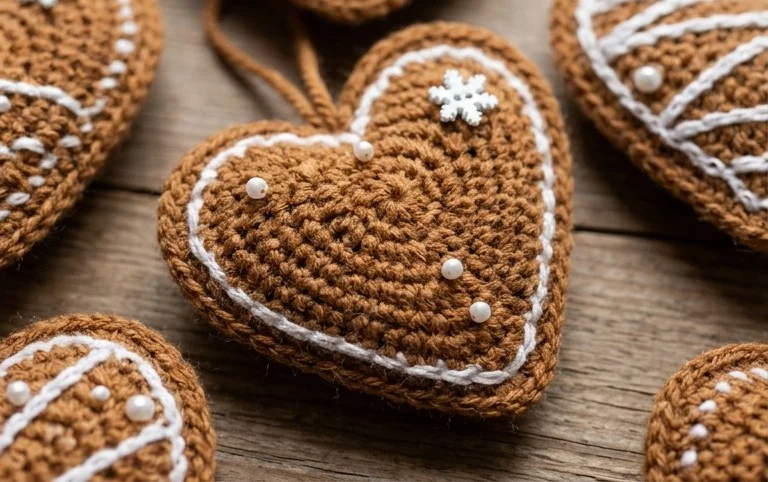
Once the final details are in place, you’ll have a soft little gingerbread heart that adds a handmade touch to a tree, gift, or seasonal display. For a simple variation, change the icing color to pale pink or use a lighter brown yarn for a different cookie-inspired look. You could also make a small group in coordinating shades and hang them together as a garland. Share a photo of your finished ornament on Pinterest or social media so other crocheters can see your color choices and finishing touches. When you’re ready for another project, explore more free crochet patterns on the blog for ideas to make throughout the year.