Easy 5-Minute Crochet Snowflake Free Pattern for Beginners
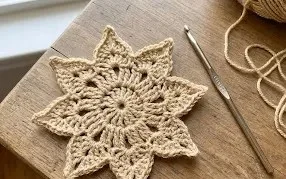
A small crochet snowflake has a crisp, lacy shape that looks lovely against a window, on a gift tag, or hanging from a holiday tree. This quick motif uses a little yarn and a hook, so it suits beginners who want a short project and experienced makers who need a handmade accent between larger pieces. The finished snowflake is light to hold, with open spaces that show off its delicate points. You’ll learn how chains and simple crochet stitches form the motif, plus how to shape and finish it neatly. Make one during a quiet break, then add a hanging loop or work several in different colors for seasonal decorating.
Why You’ll Love This Pattern
This square cotton dishcloth uses simple single crochet stitches and a sturdy worsted-weight yarn. The flat construction makes it easy to see where each row begins and ends, so it is a useful project for practicing even tension and counting.
The pattern needs only one ball of cotton yarn, making it a practical choice for leftovers. Its compact size is handy for washing dishes, wiping counters, or keeping beside the sink. You can also make a set in colors that match your kitchen.
The rows were easy to keep track of, and the cotton made a firm cloth that feels useful at the sink.
— Dana, sample maker note
Pattern Overview & Skill Level
- Skill Level: Beginner. You need to chain and single crochet in rows.
- Approximate Time: 2–3 hours, depending on your pace and how often you pause to count.
- Construction: Work a flat rectangle in turned rows of single crochet. The turning chain does not count as a stitch.
- Finished Dimensions & Sizing: About 8 × 8 in (20 × 20 cm) after washing and drying flat. Dimensions vary with yarn, hook, and tension.
Materials & Supplies Needed
- Yarn: About 90 yd (82 m) of worsted-weight (#4) 100% cotton yarn in one color. Cotton absorbs water and tolerates regular washing. A small amount of a second color may be used for a contrasting cloth.
- Hook Size: 5.0 mm / H-8 crochet hook. If your fabric feels stiff, try a 5.5 mm / I-9 hook; if it feels loose and floppy, try a 4.5 mm / 7 hook.
- Notions: Tapestry needle for weaving in the starting and ending tails, and scissors.
- Substitutions: Use another worsted cotton yarn with similar care instructions. Mercerized cotton can feel smoother and slightly less plush; unmercerized cotton often feels softer and more absorbent. Acrylic is less absorbent and may not suit a cloth intended for washing dishes. Different yarn thicknesses or hooks will change the finished size and yardage.
For a consistent square, check your fabric after about 10 rows. A useful approximate gauge is 15 single crochet stitches and 16 rows per 4 in (10 cm), measured without stretching. The stitch count is the pattern’s priority; a different row gauge changes the height.
Stitch Guide & Abbreviations (US Terms)
- ch: Chain.
- sc: Single crochet. Insert the hook in the stitch, yarn over and pull up a loop, then yarn over and pull through both loops.
- st: Stitch.
- sts: Stitches.
- rep: Repeat.
- turn: Rotate the work to begin the next row on the opposite side.
For a neat edge, work the first single crochet of each row into the first actual stitch, not into the turning chain. Keep the turning chain loose enough to reach the height of a single crochet, but do not count it as a stitch.
Step-by-Step Pattern Instructions
Dishcloth
- Foundation: Ch 31. Keep the chain relaxed; a tight foundation can pull the bottom edge inward.
- Row 1: Sc in the second ch from the hook and in each ch across. Turn. (30 sts)
- Row 2: Ch 1, sc in each st across. Turn. (30 sts)
- Rows 3–30: Rep Row 2. At the end of Row 30, fasten off, leaving a tail about 6 in (15 cm) long. (30 sts each row)
Count the stitches at the end of every few rows, especially near the edges. If your cloth is noticeably taller than it is wide, stop when the height is close to the width rather than adding extra rows. The sample size is an estimate, and your own gauge determines the final measurements.
Finishing
Thread the yarn tail onto a tapestry needle. Weave it through several stitches on the wrong side, change direction, and weave through a few more stitches before trimming. Repeat with the starting tail. Avoid pulling the yarn so tightly that the edge puckers.
Wash the cloth according to the yarn label, then lay it flat and gently smooth the corners and edges. Blocking is optional for a dishcloth, but reshaping it while damp helps the rectangle lie evenly.
Care & Washing Instructions
- Wash cotton in warm water, up to 40°C (104°F), if the yarn label permits; use a normal detergent and avoid bleach if you want to protect the color.
- Dry flat for the most even shape, or tumble-dry on low only if the yarn label allows it.
- While damp, smooth the cloth into a square and let it dry flat; follow the yarn label if the fiber content differs from cotton.
Pro Tips & Common Mistakes to Avoid
- Keep your tension steady, especially in the foundation chain. If that edge is much tighter than the rows, use a larger hook for the chain only.
- Count 30 stitches across each row. The turning chain does not count, and accidentally crocheting into it can add a stitch at the edge.
- Weave each tail through the wrong side in more than one direction. A short tail passed through only one row can work loose with repeated washing.
- To make a wider cloth, begin with more chains and work one fewer single crochet than the chain count. Add rows to increase the height. A larger cloth uses more yarn and takes longer to dry.
Frequently Asked Questions
Can I use a different yarn weight?
Yes, but the finished dimensions and fabric will change. A thinner yarn makes a smaller, lighter cloth; a thicker yarn makes a larger, heavier one. Choose a hook recommended for that yarn and check the fabric after several rows.
How can I make the cloth smaller or larger?
For a narrower or wider cloth, change the foundation chain while keeping one fewer single crochet than the number of chains. For a shorter or taller cloth, work fewer or more rows. Keep the width and height close if you want a square.
Is this pattern suitable for a first crochet project?
Yes. It uses chains and single crochet in straight rows, with no shaping or joining. The main challenge is keeping 30 stitches in each row, so count regularly and mark the first stitch if the edges are hard to see.
May I sell dishcloths made from this pattern?
Check the designer’s terms before selling finished items, and follow any credit or selling restrictions they state. If you use a different designer’s yarn or pattern instructions, check those terms as well.
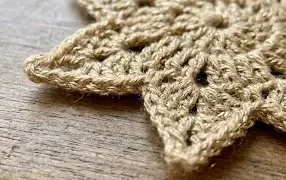
Your finished snowflake is a small handmade detail with plenty of charm, whether it hangs on a tree, dresses up a wrapped gift, or catches the light in a window. Try a second one in a pale blue or metallic thread for a different seasonal look, keeping the same stitches and shaping. If you make this motif, share a photo on Pinterest or your favorite social media so other crocheters can see how yours turned out. You can also browse the blog for more free crochet patterns, from quick decorations to useful everyday projects.