Bright Stars Quilt Pattern: Easy Christmas Sewing Guide
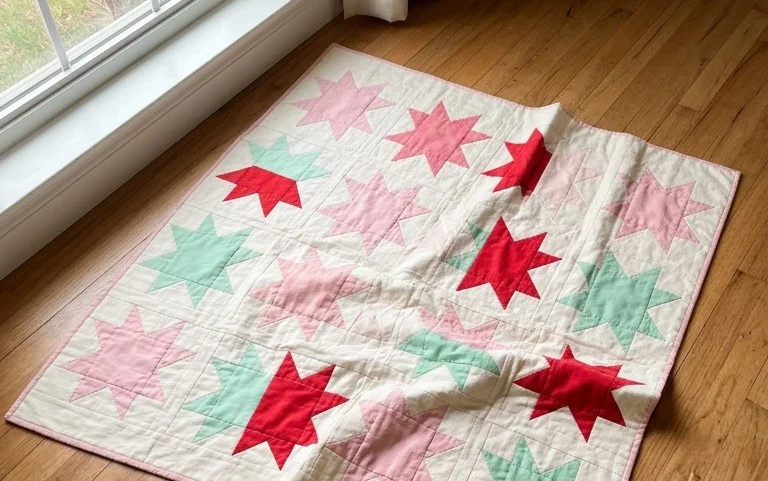
Red, green, and cream cotton come together in the Bright Stars quilt as crisp star blocks and a festive patchwork layout. The finished quilt has a cheerful Christmas look, with the soft texture and familiar warmth that make it easy to drape over a sofa or fold at the end of a bed. This project suits quilters who enjoy arranging fabric into clear geometric shapes, and it can make a thoughtful handmade gift for someone who brings out holiday quilts each year. The star blocks give you a satisfying repeat as the design takes shape. In this guide, you’ll find practical notes on choosing coordinating prints, keeping fabric pieces aligned, and assembling the quilt top, along with ideas for making the colors your own.
Why You’ll Love This Pattern
A firm cotton fabric and a simple single-crochet repeat make this dishcloth useful for everyday washing and easy to keep beside the sink. The pattern is worked flat in rows, so you can see the shape develop without managing increases or decreases.
It is a practical first project for learning to keep an even edge and count stitches. The 35-stitch width is manageable, and the repeated rows make it easy to pause and pick up again. A single cloth takes only a small amount of worsted cotton, so leftovers from another project may be enough. It also makes a useful handmade gift when paired with a bar of soap or kitchen towel.
The rows were easy to follow, and I use my finished cloth every day. I checked the edges as I went, which helped keep it square.
— Mara, home crocheter
Pattern Overview & Skill Level
- Skill Level: Beginner. You should know how to chain and make a single crochet stitch.
- Approximate Time: 2–3 hours, depending on your pace and how often you stop to check your stitch count.
- Construction: Worked flat from the bottom up in 35 rows of single crochet. The first chain forms the foundation, and there is no separate border or seam.
- Finished Dimensions & Sizing: About 8 × 8 in (20 × 20 cm), using the stated yarn and hook. Small differences in tension can change the final size.
Materials & Supplies Needed
- Yarn: About 55 yd (50 m) of worsted-weight cotton yarn, approximately 20–25 g. Use one color, or change colors between rows if you have suitable scraps.
- Hook Size: 4.5 mm / 7. A hook handle marked with a different letter can vary by brand, so check the metric size.
- Notions: Tapestry needle for weaving in the ends, scissors, and a ruler or measuring tape. A stitch marker is optional for marking the first stitch of a row.
- Substitutions: Choose cotton or a cotton-dominant yarn that can handle frequent washing. A thinner yarn makes a smaller, lighter cloth; a thicker yarn makes a larger, denser cloth and uses more yarn. Acrylic is less absorbent than cotton and may feel different when wet, so check its care label before substituting.
For a close match to the stated size, make a small test swatch. The finished cloth should feel flexible enough to fold but dense enough that the fabric does not have large gaps.
Stitch Guide & Abbreviations (US Terms)
- ch: Chain. Yarn over and pull the yarn through the loop on the hook.
- sc: Single crochet. Insert the hook into the stitch, yarn over and pull up a loop, then yarn over and draw through both loops.
- st / sts: Stitch / stitches.
- US terms: The stitch names in this pattern follow standard US crochet terminology.
Work the first single crochet into the second chain from the hook. That skipped chain does not count as a stitch. At the end of each row, chain one and turn; this turning chain also does not count as a stitch.
Step-by-Step Pattern Instructions
Dishcloth
- Foundation: Ch 36. Keep the chain loose enough for the hook to enter easily; a tight foundation can pull the lower edge inward.
- Row 1: Sc in the second ch from the hook and in each ch across. Ch 1 and turn. (35 sts)
- Rows 2–5: Sc in each st across. Ch 1 and turn. (35 sts each row)
- Rows 6–10: Sc in each st across. Ch 1 and turn. (35 sts each row)
- Rows 11–15: Sc in each st across. Ch 1 and turn. (35 sts each row)
- Rows 16–20: Sc in each st across. Ch 1 and turn. (35 sts each row)
- Rows 21–25: Sc in each st across. Ch 1 and turn. (35 sts each row)
- Rows 26–30: Sc in each st across. Ch 1 and turn. (35 sts each row)
- Rows 31–34: Sc in each st across. Ch 1 and turn. (35 sts each row)
- Row 35: Sc in each st across. Do not chain or turn. (35 sts)
Finishing
Cut the yarn, leaving a tail long enough to weave in, and pull the tail through the loop on your hook. Thread the tail onto a tapestry needle and weave it through the backs of several stitches. Change direction once so the end is less likely to work loose. Secure the starting tail in the same way. Check that both sides lie flat, then gently stretch the cloth into a square before washing.
Care & Washing Instructions
- Wash cotton dishcloths in warm water, around 40°C (104°F), with similar colors; follow the yarn label if it gives different instructions.
- Tumble-dry on low or lay flat to dry. Avoid high heat if the yarn label warns that it may shrink.
- After washing, smooth the cloth back into a square while damp. Cotton usually does not need formal blocking.
Pro Tips & Common Mistakes to Avoid
- Keep tension steady: If your first chain is much tighter than the rows, the bottom edge may pucker. Use a slightly larger hook just for the foundation chain if needed, then return to the stated hook.
- Count across each row: Check for 35 stitches before turning. The first and last stitches are easy to miss, especially when the turning chain is mistaken for a stitch.
- Hide ends securely: Weave each tail through the back of several stitches, then change direction. Leaving a very short tail can let it come free after repeated washing.
- Adjust size with care: To make the cloth wider, start with more chains; to make it longer, work more rows. Adding stitches or rows increases yarn use, and changing both dimensions can alter the square proportions.
Frequently Asked Questions
Can I use a different cotton yarn?
Yes. Choose a smooth, washable cotton in a similar worsted weight for a close result. A thinner yarn makes a smaller cloth, while a thicker yarn creates a heavier fabric and needs more yarn.
How can I make the dishcloth larger or smaller?
Change the starting chain to adjust the width, and add or remove rows to adjust the length. Keep the number of single crochet stitches consistent across every row, and measure as you work because different yarns and tension change the finished dimensions.
Is this pattern suitable for a first crochet project?
Yes, if you can make a chain and single crochet. The main skill is finding the first and last stitch in each row. Count each row as you go rather than waiting until the end to check the edges.
May I sell dishcloths made from this pattern?
Check the designer’s terms before selling finished items, and follow any rules about pattern credit or commercial use. If you sell the cloth, describe the yarn fiber accurately so customers know how to wash it.
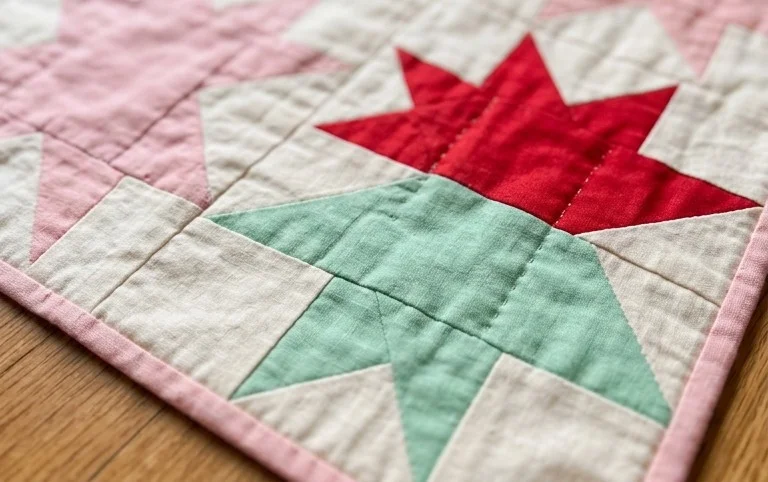
When the last seam is sewn and the star blocks sit together in a finished quilt, you’ll have a handmade piece ready to bring out each Christmas. For a simple variation, swap the traditional red and green for navy, soft blue, and cream, or choose a smaller scale of prints for a quieter look. Take a photo of your quilt on the sofa or folded at the foot of a bed and share it on Pinterest or your favorite social media account. If you enjoyed working with the star layout, explore more free patterns on the blog for another project to add to your handmade home.