Easy Beginner Kitty Granny Squares Free Crochet Pattern
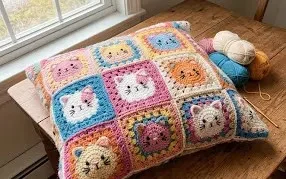
A little cat face with pointed ears turns a classic granny square into a cheerful crochet motif. Kitty granny squares have a soft, textured look, and you can join them into a blanket, cushion cover, tote, or a small wall hanging. They suit beginners who are comfortable with basic stitches, as well as gift makers who want to build a personal project one square at a time. You’ll learn how granny-square rounds create the base and how simple color changes and stitched details bring the kitty to life. Each square is small enough to finish in a relaxed session, so it’s easy to see your progress. Choose a familiar cat color or make every face a different shade, then use the finished squares to add a handmade touch to a room or a thoughtful gift.
Why You’ll Love This Pattern
This square cotton dishcloth uses simple single crochet rows to make a sturdy, absorbent cloth for everyday kitchen use. The pattern is easy to pause and pick up again, and its small size makes it a useful way to practise even tension and consistent row edges.
A single ball of worsted cotton is usually enough, so you can use a leftover skein or make several cloths in different colors. The finished square also makes a practical handmade gift that is easy to fold and wrap.
The rows were easy to keep track of, and the cotton cloth feels sturdy after its first wash.
— Mara, home crocheter
Pattern Overview & Skill Level
- Skill Level: Beginner. You need to know how to chain and make a single crochet.
- Approximate Time: 2–3 hours, depending on your pace and experience.
- Construction: Work a flat square in turned rows, then weave in the starting and ending tails. There is no seam or separate border.
- Finished Dimensions & Sizing: About 8 × 8 in (20 × 20 cm) when blocked to the stated gauge. Small differences in tension may change the final measurements.
Materials & Supplies Needed
- Yarn: About 100 yd (92 m) of worsted-weight (#4) 100% cotton yarn in one color. Cotton absorbs water and handles frequent washing well.
- Hook Size: 5.0 mm / H-8 crochet hook. Use a hook that gives a firm fabric without making the stitches difficult to work.
- Notions: Tapestry needle for weaving in ends, scissors, and a ruler or measuring tape. A stitch marker is optional for marking the first stitch of a row.
- Gauge: 14 sc and 16 rows measure 4 in (10 cm) after washing and drying. Make a small swatch if you need the finished cloth to match these dimensions closely.
- Substitutions: Choose another 100% cotton yarn of similar thickness. A thinner yarn makes a smaller, lighter cloth; a thicker yarn makes a larger, denser cloth and may need a larger hook. Acrylic can be used, but it may be less absorbent and can feel different against dishes.
Stitch Guide & Abbreviations (US Terms)
- ch: Chain.
- sc: Single crochet. Insert the hook into the indicated stitch, yarn over and pull up a loop, yarn over again and pull through both loops on the hook.
- st / sts: Stitch / stitches.
- rep: Repeat the stated instructions.
- sk: Skip the indicated stitch.
- turn: Rotate the work so you can crochet back across the row.
The turning chain does not count as a stitch in this pattern. Work the first single crochet into the first stitch of each row, rather than into the turning chain. This keeps the stitch count at 30.
Step-by-Step Pattern Instructions
Dishcloth
Use worsted cotton and a 5.0 mm hook. The finished cloth is a flat square made in single crochet. Keep the turning chain loose enough that the edge does not pull inward.
- Foundation: Ch 31. (31 ch)
- Row 1: Sc in the second ch from the hook and in each ch across. Turn. (30 sts)
- Row 2: Ch 1, sc in each st across. Turn. (30 sts)
- Rows 3–30: Rep Row 2. At the end of every row, count 30 sts before turning. After Row 30, fasten off, leaving a tail long enough to weave in. (30 sts each row)
Finishing
Thread the yarn tail onto a tapestry needle. Weave it through several stitches on the wrong side, change direction, and pass through a few more stitches before trimming the excess. Secure the foundation tail in the same way. Do not pull the tails so tightly that the corners draw in.
Wash and dry the cloth according to the yarn label, then lay it flat and gently shape it into a square. If the sides are uneven, use your hands to align the edges while the cloth is damp. Check the final measurement after drying, since cotton can relax or shrink slightly in the wash.
Care & Washing Instructions
- Wash cotton cloths in warm water, around 40°C (104°F), with similar colors; follow the yarn label if it gives different instructions.
- Dry flat for the neatest shape, or tumble dry on low if the yarn label permits it.
- While damp, reshape the corners and edges by hand; pin lightly only if the cloth needs help staying square.
Pro Tips & Common Mistakes to Avoid
- Keep your tension steady. If the fabric feels stiff or your hook is hard to insert, try a 5.5 mm hook; if it feels loose and holey, try 4.5 mm.
- Count all 30 stitches at the end of each row. Mark the first stitch if you tend to miss the last stitch near the turning chain.
- Weave each yarn tail through the back of several stitches and change direction before trimming. A short pass in only one direction can work loose with repeated washing.
- To make a larger cloth, add chains while keeping one fewer single crochet than the chain count, then work more rows to match its width. A larger square uses more yarn; check your remaining yardage before starting.
Frequently Asked Questions
Can I use a different cotton yarn?
Yes. Choose a similar worsted-weight cotton for a result close to the sample. If the yarn is thinner or thicker, the cloth’s dimensions and texture will change, so check the width as you work and adjust the hook if needed.
How can I make the dishcloth smaller or larger?
For a narrower or wider cloth, change the foundation chain and work one fewer single crochet than the number of chains. For a shorter or taller cloth, work fewer or more rows. Aim for a square by measuring the width and height as you go.
Is this pattern suitable for a first crochet project?
Yes. It uses only chains and single crochet worked in straight rows. The main thing to watch is the first and last stitch of each row, because missing either one will gradually change the width.
May I sell dishcloths made from this pattern?
You may sell finished items if the designer’s terms allow it. Credit the pattern designer when required, and write your own listing description and photographs rather than presenting the pattern itself as your work.
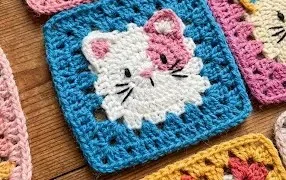
Once your kitty squares are finished, their little ears and stitched faces give a blanket or cushion a playful, handmade character. For a simple variation, keep the same design but change the background color on every square; the repeated cat motif will still tie the project together. Share a photo of your finished work on Pinterest or your favorite social media platform, especially if you’ve tried a color combination of your own. You can also browse the blog for more free crochet patterns, from small projects for a quiet evening to larger pieces made by joining motifs together.