Easy Beginner Amigurumi Christmas Snowman Free Pattern
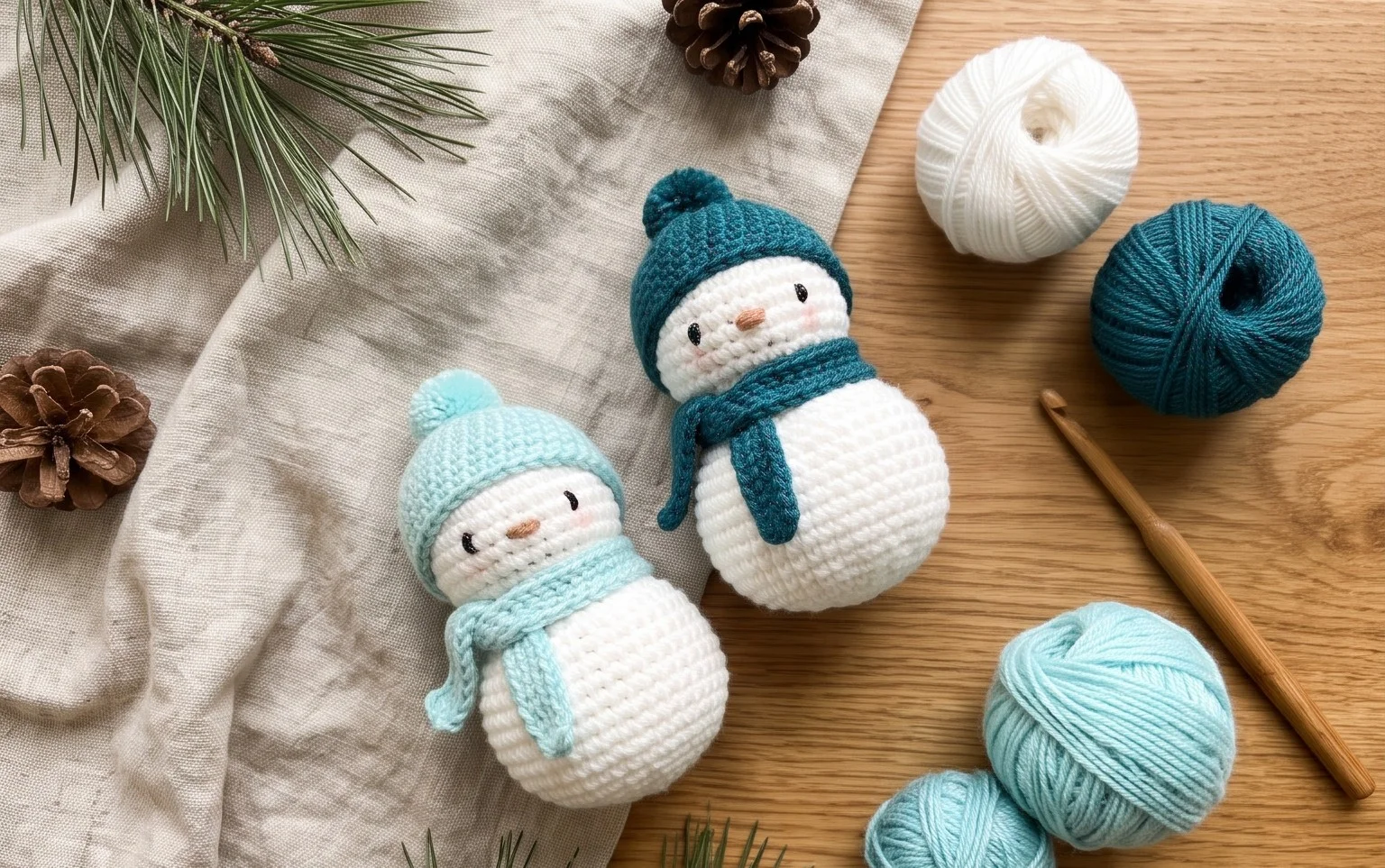
Soft yarn, a rounded body, and a little carrot-shaped nose give this crocheted snowman a friendly look that fits right in with holiday decorations. The finished figure feels light but sturdy once it is stuffed, and its small size makes it easy to place on a mantel, tuck into a gift basket, or hang near a tree. Beginners can practice single crochet in the round, along with simple increases and decreases, while more experienced crocheters can enjoy a relaxed project between larger gifts. You will learn how to shape the body, keep the stitches close enough to hold the stuffing, and add the details that bring the snowman to life. The simple forms are satisfying to watch take shape, and the finished piece makes a personal handmade gift for a friend, teacher, or family member.
Why Crocheters Love It
Worsted cotton gives this simple dishcloth a firm, absorbent texture that holds up to regular kitchen use. The pattern is made in single crochet rows, so you can concentrate on keeping the edges even rather than learning a complicated stitch repeat. It uses about 90 yards of yarn, making it a practical choice for a small leftover ball, and the finished cloth is easy to fold or stack.
The flat construction is beginner-friendly: there are no seams, shaping, or pieces to join. You can also stop after any row if you need to put your work down, then pick it up again by counting the stitches across. Use the cloth for washing dishes, wiping counters, or wrapping around a bar of handmade soap.
The rows were easy to follow, and my cotton cloth came out sturdy without feeling stiff. I kept a marker at the edge to help me count.
— Maya, first-time dishcloth maker
Pattern Overview & Skill Level
- Skill Level: Beginner. You need to chain and work single crochet stitches in rows.
- Approximate Time: About 2 to 3 hours, depending on your pace and how often you pause to check your stitch count.
- Construction: A flat rectangle worked from the bottom edge upward in turned rows. No border or seaming is required.
- Finished Dimensions & Sizing: About 8 inches square when worked to gauge. The cloth may vary slightly with cotton yarn, hook choice, and washing.
Materials & Supplies Needed
- Yarn: About 90 yards of worsted-weight cotton yarn, also labeled medium or #4. One color is enough; choose a smooth, tightly spun cotton for an absorbent cloth.
- Hook: 4.5 mm / US 7. If your stitches are loose, try a 4.0 mm / US G-6 hook; if they are tight, try a 5.0 mm / US H-8 hook. A different hook can change the finished size.
- Notions: Tapestry needle for weaving in the starting and ending tails, scissors, and an optional stitch marker for the first stitch of each row.
- Substitutions: Cotton-linen yarn can replace cotton if its label recommends a similar hook; it may feel a little drapier. A cotton-acrylic blend is another option, though it may absorb water differently. Avoid fuzzy or delicate yarns for a cloth that will be washed often. Check the yarn label and make a small gauge swatch before starting.
- Gauge: 14 single crochet stitches and 14 rows measure about 4 inches. The gauge helps the cloth reach its intended size, but a small difference is fine for everyday use.
Stitch Guide & Abbreviations (US Terms)
- ch: Chain.
- sc: Single crochet. Insert the hook in the stitch, yarn over and pull up a loop, yarn over again and pull through both loops.
- st: Stitch.
- sts: Stitches.
- FO: Fasten off by cutting the yarn and pulling the tail through the last loop.
- Turning chain: The chain made at the beginning of a row to bring the yarn to working height. In this pattern it does not count as a stitch.
Keep the turning chain loose enough to turn comfortably, but do not work into it. Each row has 28 single crochet stitches, including the stitch at each edge.
Step-by-Step Pattern Instructions
Dishcloth
- Foundation: Ch 29. Keep the chain relaxed so the bottom edge does not pull inward.
- Row 1: Sc in the second ch from the hook and in each ch across. Turn. (28 sts)
- Rows 2–28: Ch 1, then sc in each st across. Turn. The ch 1 does not count as a stitch. (28 sts each row)
After Row 28, check that the top and bottom edges have the same number of stitches. A finished piece should measure about 8 inches by 8 inches at the stated gauge. If your cloth is a little wider or taller, that is fine; avoid adding rows simply to reach a measurement if your fabric already looks square.
Finishing
After the last row, FO and leave a tail long enough to weave in. Thread the tail onto a tapestry needle and pass it through several stitches on the wrong side, changing direction once to help secure it. Repeat with the foundation tail. Trim the ends close without cutting into the fabric. No joining or seam is needed.
Care & Washing Instructions
- Wash cotton in cool or warm water, up to 40°C (104°F), with similar colors; follow the yarn label if it gives different instructions.
- Dry flat or tumble dry on low if the yarn label permits; reshape the edges while the cloth is damp.
- Lightly block or smooth the cloth flat after washing, using no direct high heat on the yarn.
Pro Tips & Common Mistakes to Avoid
- Keep tension steady: Cotton has less stretch than many acrylic yarns. Let the yarn glide through your fingers rather than pulling each stitch tight, especially along the foundation chain.
- Count the row: Count 28 stitches before turning. Place a marker in the first stitch of each row if you tend to miss the edge stitch; move it up as you work.
- Watch the turning chain: The ch 1 is not a stitch. Working into it can add a stitch and make the sides flare; skipping the first sc can instead narrow the cloth.
- Adjust size deliberately: For a wider cloth, add an even number of chains to the foundation, then work one fewer sc than the chain count. Add or remove rows for height. A larger cloth uses more yarn, and a larger hook can make the fabric looser and increase its dimensions.
Frequently Asked Questions
Can I use a different kind of yarn?
Yes, but cotton is a good choice for absorbency and repeated washing. A cotton-linen blend can work if the yarn label supports the hook size. Wool may shrink or felt, and acrylic can absorb less water, so check the care label before substituting.
How can I make the dishcloth larger or smaller?
Change the foundation chain to adjust the width, keeping the pattern count consistent: work one fewer single crochet than the number of chains. Add or remove rows to change the height. The dimensions and yardage will change with the stitch count and your gauge.
Is this pattern suitable for a first crochet project?
Yes. It uses only chains and single crochet stitches, with no increases, decreases, or joining. The main challenge is keeping 28 stitches in every row, so count across before turning until the edges become easy to recognize.
May I sell dishcloths made from this pattern?
Check the pattern designer’s terms before selling finished items, and follow any requirements for credit or use. If you give a cloth as a gift, include the yarn-care information so the recipient can wash it appropriately.
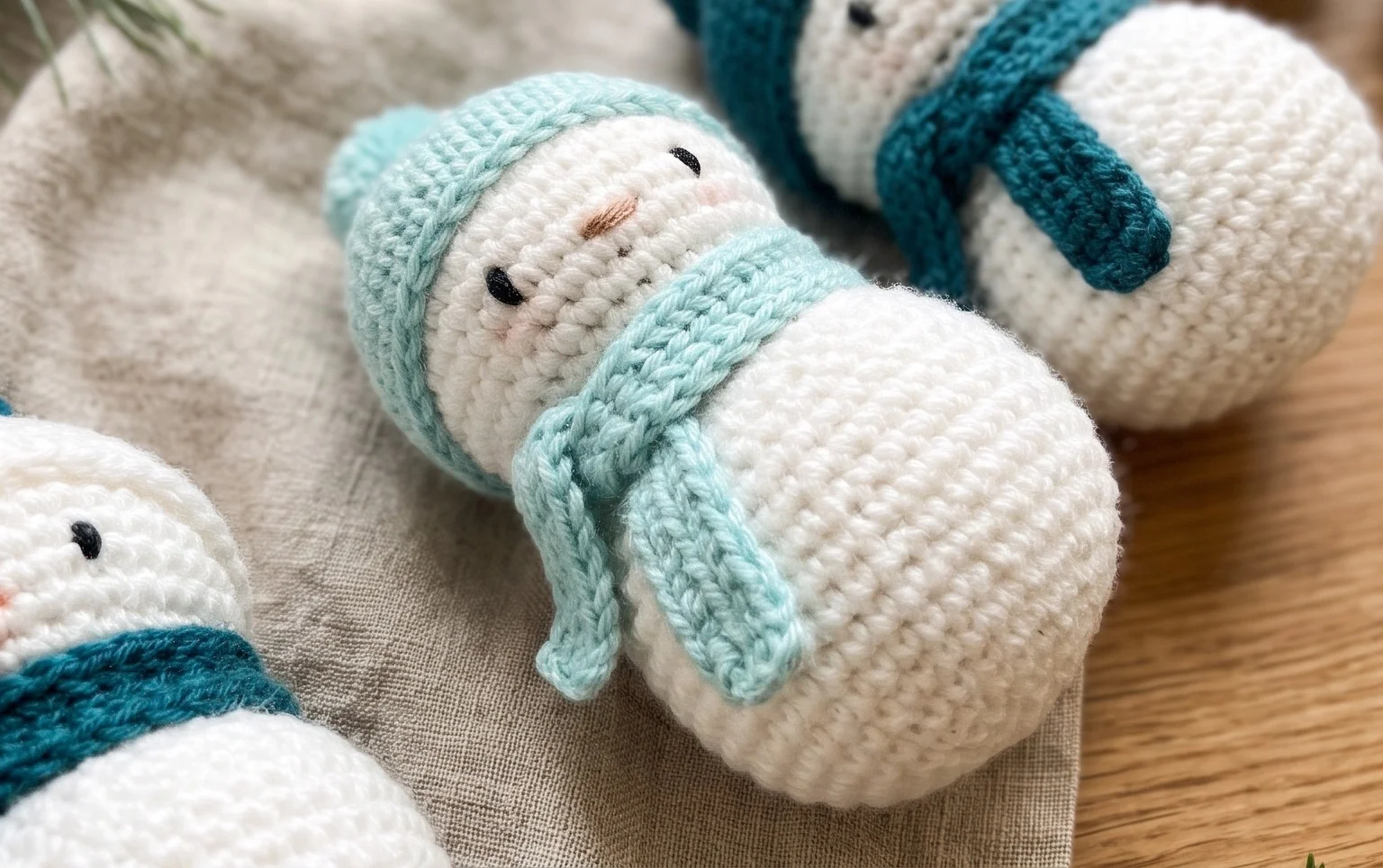
Your snowman is ready to bring a handmade touch to a shelf, holiday table, or gift basket, with its rounded shape and little stitched details giving it plenty of personality. For a simple variation, use a soft blue or red yarn for an accessory instead of a traditional color. If you make one, share a photo on Pinterest or your favorite social media platform; seeing different yarn choices and finishing touches is part of the fun. You can also browse the blog for more free crochet patterns, including small seasonal projects that use familiar stitches and are easy to fit into a busy week.